
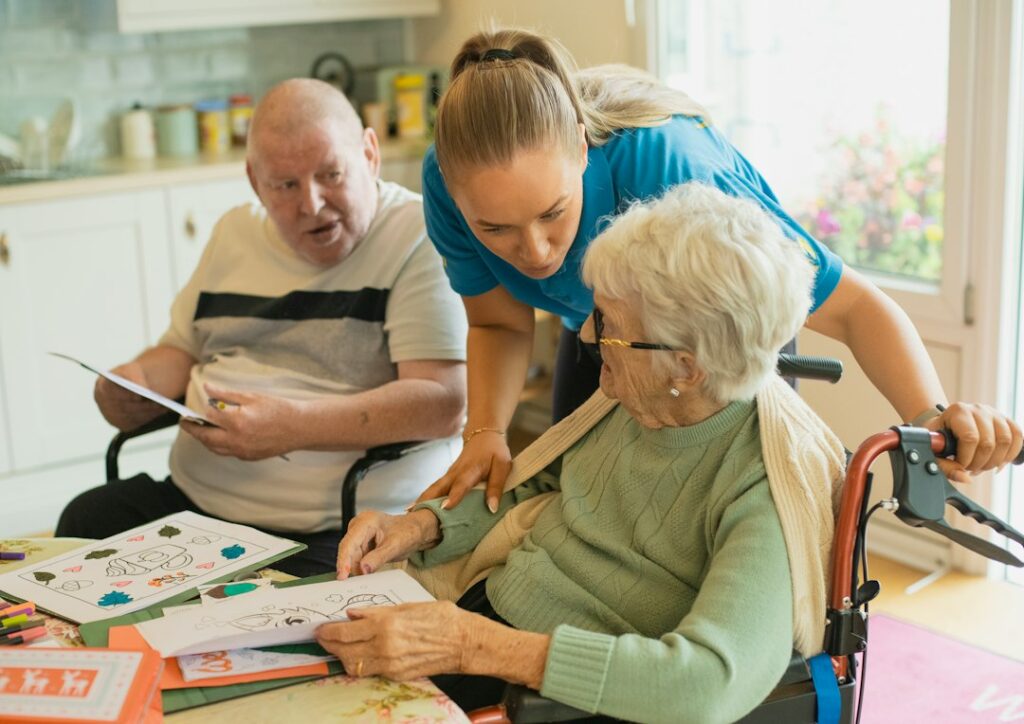
Assisted living is often discussed using broad assumptions: that it is only for people who can no longer live independently, that every residence provides the same level of care, or that moving in means giving up control. These ideas can make an already difficult decision more confusing.
For residents and families in Fleetwood, PA, understanding what assisted living actually includes can help separate reasonable concerns from myths. Pennsylvania uses distinct categories for personal care homes, assisted living residences, and nursing homes, and the differences matter.
Myth: Assisted living is the same as a nursing home
Assisted living and nursing homes serve different purposes. Assisted living is generally intended for people who need help with daily activities but do not require continuous skilled nursing care. Nursing homes provide a higher level of medical and rehabilitative support for people with more complex health needs.
Assisted living may include help with:
- Bathing, dressing, grooming, or using the bathroom
- Walking, transferring, or positioning
- Meals and hydration
- Medication assistance
- Laundry, housekeeping, and transportation arrangements
- Scheduling or coordinating health care
A person recovering from a short-term illness may need rehabilitation or nursing care rather than assisted living. Someone who mainly needs reminders, meals, supervision, or help with routine tasks may be better suited to a residential care setting.
The correct question is not simply, “Is assisted living better than a nursing home?” The more useful question is, “What level of support matches this person’s current health needs?”
Myth: Moving to assisted living means losing independence
Assisted living is designed to provide support while preserving as much independence and personal choice as possible. A resident may still choose clothing, daily routines, visitors, meals when options are available, activities, personal furnishings, and how to spend private time.
Independence does not always mean doing every task without assistance. It can also mean having a safe home, making decisions, maintaining relationships, and receiving only the help needed for certain activities.
For example, a resident may need help getting into the shower but still choose the time of day, the clothing to wear afterward, and whether to attend an activity. Another resident may need medication assistance but remain fully involved in medical decisions.
A change in housing should not automatically mean a loss of dignity or control. Residents retain rights related to privacy, communication, visitors, personal belongings, health care participation, and freedom from abuse, neglect, intimidation, and unnecessary restraint.
Myth: Assisted living is only for people who are very frail
Many people move into assisted living before a serious crisis occurs. The decision may follow repeated falls, missed medications, difficulty preparing meals, isolation, or the exhaustion of a family caregiver.
Some residents need help with only one or two activities. Others require regular supervision throughout the day. Needs may also change over time.
This means assisted living is not limited to one appearance or age group. A person may be physically active, socially engaged, or able to manage many parts of daily life while still benefiting from support with bathing, transportation, medication routines, or meals.
In a rural-suburban community such as Fleetwood, transportation, winter weather, and the distance between homes and essential services can also affect whether living alone remains practical. Ice, snow, reduced daylight, and limited driving can turn small daily challenges into safety concerns.
Myth: All assisted living residences provide the same care
Assisted living residences differ in size, staffing, policies, costs, activities, physical layout, and the types of care they can safely provide. Pennsylvania also distinguishes between assisted living residences and personal care homes, although both may provide assistance with daily activities.
A residence may be appropriate for one person but unsuitable for another. Differences may include:
- Whether staff are available overnight
- How medications are handled
- Whether dementia-related needs can be supported
- How mobility limitations are managed
- Whether residents can keep pets or personal furniture
- How transportation is arranged
- What happens if health needs become more complex
- Which services cost extra
Families should review the written contract, fee schedule, admission requirements, discharge policies, and service plan rather than relying on a general description.
A visit at more than one time of day can reveal useful details. Mealtimes, evenings, weekends, and overnight staffing patterns may look different. It is also reasonable to observe whether staff speak respectfully with residents and whether residents appear comfortable asking for help.
Myth: Assisted living provides round-the-clock medical care
Assisted living may have staff available around the clock, but that does not mean it functions as a hospital or skilled nursing facility. Staff availability, staff credentials, emergency procedures, and nursing coverage vary.
Many residences can coordinate outside medical services, help arrange appointments, or assist with prescribed medications. However, they may not provide continuous monitoring for unstable medical conditions, complex wound care, ventilator support, or other services requiring a nursing facility or hospital level of care.
Before moving, families should ask specifically:
- Who responds to a fall or medical emergency?
- Is a nurse present, on call, or available only at certain times?
- Can staff help with insulin, oxygen, or specialized equipment?
- What happens after a hospitalization?
- Which changes in health would require a transfer?

Clear answers are more useful than the general statement that “care is available.”
Myth: Medicare or Medicaid automatically pays for assisted living
Assisted living costs are often paid privately, and Medicare generally does not cover room, board, and routine assisted living services. Medicaid rules are more limited and may depend on the specific service, program, eligibility requirements, and setting.
In Pennsylvania, assisted living residences and personal care homes are licensed and inspected by the Department of Human Services. Licensing does not mean that every cost is covered by public benefits.
Households should separate expenses into categories:
- Housing and meals
- Personal care assistance
- Medication management
- Transportation
- Incontinence supplies
- Therapy or outside medical services
- Additional care as needs change
The total monthly cost may be different from the advertised base rate because some services are charged separately. A written fee schedule is essential for realistic planning.
Myth: A person with dementia cannot live in assisted living
Dementia does not automatically rule out assisted living. Some residences can support people with early or moderate memory loss, while others have specialized programs or secured areas. The appropriate setting depends on wandering risk, behavior changes, medication needs, mobility, communication, and the amount of supervision required.
A diagnosis alone does not answer whether a residence is suitable. Families should ask how staff respond to nighttime confusion, exit-seeking, falls, agitation, missed meals, and changes in judgment.
The person’s preferences also matter. Familiar routines, meaningful activities, quieter spaces, and regular contact with family may support adjustment. A residence should explain its limits honestly instead of promising that it can manage every stage of dementia.
Myth: Families must wait for an emergency before considering assisted living
Waiting until after a fall, hospitalization, or caregiver breakdown can leave fewer choices and create pressure to make a decision quickly. Planning earlier allows the older adult to participate while decision-making is still easier.
Early planning does not require an immediate move. It can involve discussing preferences, reviewing finances, identifying essential care needs, and learning what services are available locally. A family can also create a backup plan for winter storms, illness, or a sudden change in driving ability.
The most reliable decision is based on current needs, likely changes, personal preferences, contract details, and the level of care a residence is licensed and prepared to provide. Assisted living is not automatically the right answer, but it should be evaluated on facts rather than fear.
